Week 2: Math + Art
The first insight I gained was the importance of mathematical formulas in artistic measurements such as dimensions, areas, or volumes. Such a knowledge base is socially relevant, especially when artists are reinterpreting the natural world in their work. One example of this comes from the idea of the vanishing point (Crannell 2019). Growing up, the separation between art and math was so strong that it made it difficult for me to comprehend the “vanishing point theorem”. Today, I see that my mechanical engineering friends who are constantly visualizing 3D objects are using this principle. In lecture, the origins of the vanishing point are further explained through Brunelleschi’s work (Vesna 2012). With the majority of his work being accurate depictions of churches and architecture, it makes sense that he utilized these principles.
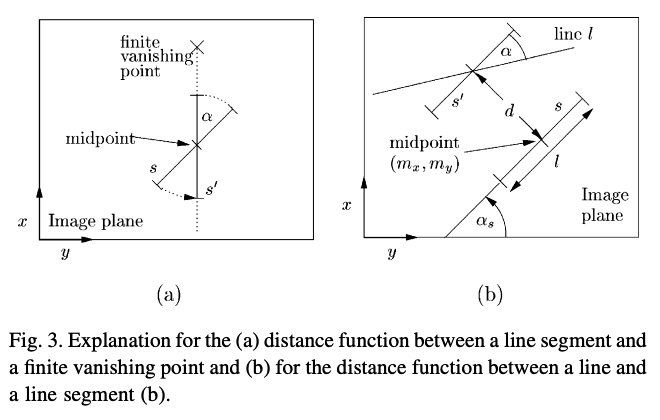
Image 1 (Rothner 2001)
Another insight that I garnered is the role of art in teaching the scientific world. Alberti’s treatise “On Painting” in 1435 provides a set of guidelines for modeling perspective through math in order to represent the natural world (Alberti 2011). The explanation of how a painting is the intersection of a visual pyramid at a given distance with a fixed center and defined position of light is systematic. This type of methodical approach to art is not something that I’ve had a lot of experience with. For some reason, I always felt like art was more abstract and beyond understanding. In a sense, this is also true in regards to the rise of the fourth dimension in art (Henderson 1984). The fourth dimension marked a period of liberation for artists who were now free to adopt an objectless style and reject the one-point perspective system. This led me to another insight, art is ever-evolving.

Image 2 (Selikoff 2023)
One artist that I enjoyed learning about was Theo Jansen and how he takes advantage of mathematics and engineering to build walking kinetic sculptures (Jansen 2022). From either perspective, artistic or mathematical, his work is a wonder. The smooth, uniform, and rhythmic motion of the sculptures is aesthetically pleasing. Meanwhile, the engineering and mathematical modeling to create this sculpture is also just as amazing. It’s cool to see how people take these innovations and build upon them. I see now that mathematics, art, and science should go hand-in-hand as it results in even more beautiful work than any subject can do alone.

Image 3 (Patnaik 2015)
Sources:
Alberti, Leon Battista, 1404-1472. Leon Battista Alberti : On Painting : a New Translation and Critical Edition. New York: Cambridge University Press. 2011.
Crannell, Annalisa, Frantz, Marc and Futamura, Fumiko. Perspective and Projective Geometry, Princeton: Princeton University Press. 2019.
Henderson, Linda Dalrymple. “The Fourth Dimension and Non-Euclidean Geometry in Modern Art: Conclusion.” Leonardo, vol. 17, no. 3. 1984.
Jansen, Theo. Strandbeesten: The New Generation Hb. Hannibal, 2022.
Vesna, Victoria. Mathematics | Perspective | Time | Space DESMA9: Art, Science and Technology. 2012.
Images:
Patnaik, Swadhin. "Analysis of Theo Jansen mechanism (Strandbeest) and its comparative advantages over wheel based mine escavation system." IOSR J Eng 5.7. 2015.
Rother, Carsten. "A new approach to vanishing point detection in architectural environments." Image and Vision Computing 20.9-10. 2002.
Selikoff, Nathan, Bruce D. Campbell, and Francesca Samsel. "Nathan Selikoff: Explorations in Higher Dimensionality and Complexity." IEEE Computer Graphics and Applications 43.5. 2023.


Hello William, I loved the detail and pictures in your post. I too had such a weird relationship when it came to viewing math as art and it wasn’t until this class actually that it clicked for me that they are similar in many ways. For example what you mentioned in your post about Theo Jansen and the kinetic moving sculptures that he would create. When I see something like that I think of course math and art are related and work closely with one another. Overall a great post and I cant wait to read more of your posts.
ReplyDelete